
PID-01
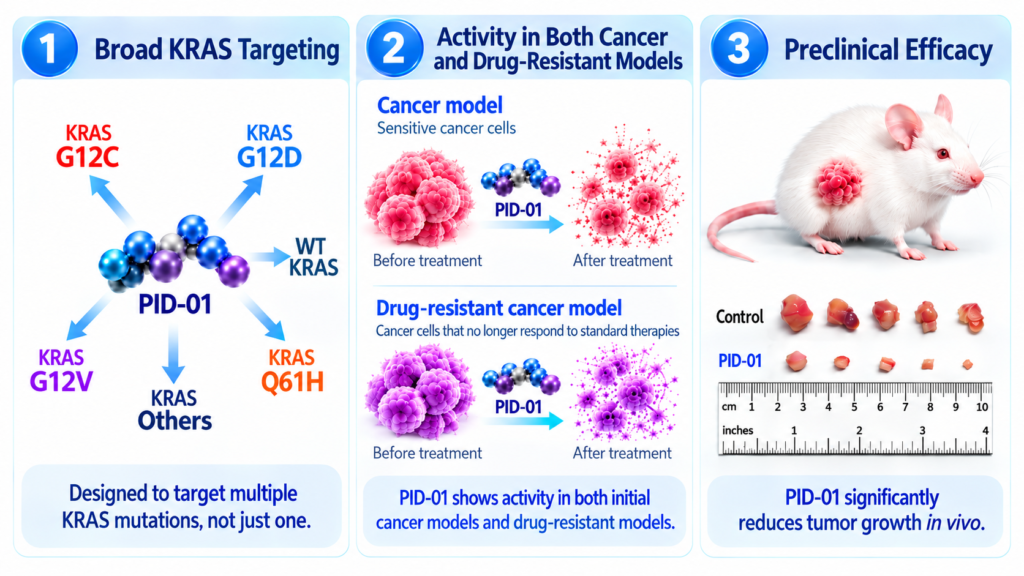
A mutation-agnostic pan-KRAS lead candidate designed for broad KRAS targeting across multiple variants, with potent anticancer activity demonstrated in NSCLC and PDAC models, including those resistant to existing KRAS-targeted therapies.
PID-01 is a 3D synthetic peptide therapeutic designed to directly engage KRAS across multiple variants rather than focusing on a single mutation. Its multivalent 3D architecture enables engagement of broad KRAS surface regions, supporting a mutation-agnostic targeting strategy. In preclinical studies, PID-01 demonstrated anticancer activity across multiple KRAS-driven lung and pancreatic cancer models and retained activity in models resistant to existing KRAS-targeted therapies. PID-01 has also reduced tumor growth in vivo without notable treatment-related weight loss, supporting its potential for the treatment of KRAS-driven and drug-resistant cancers.
PID-02
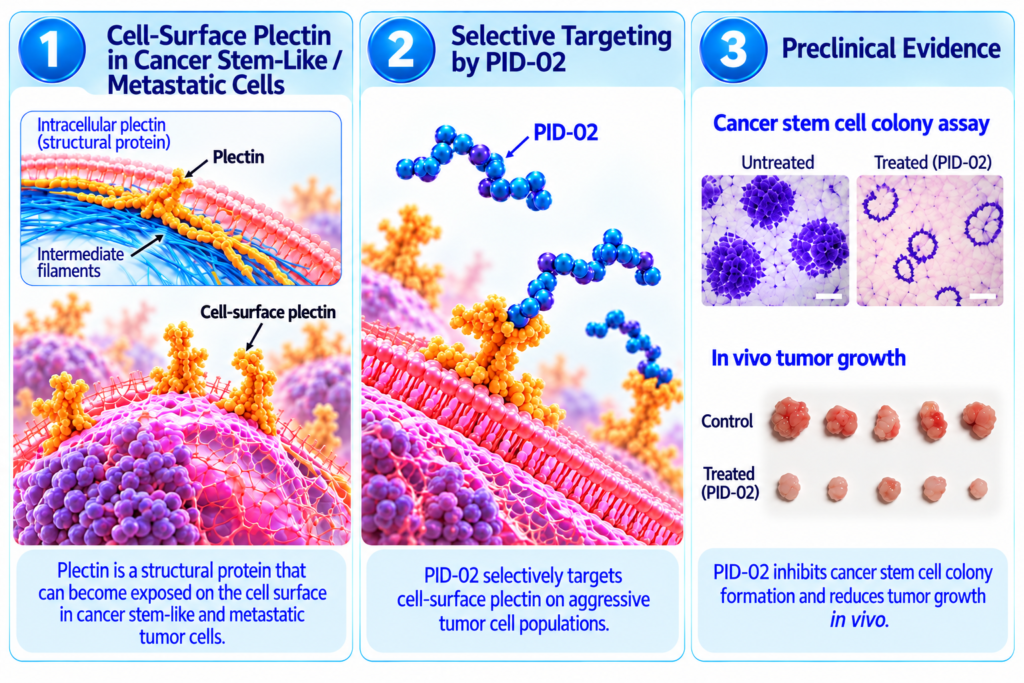
A next-generation therapeutic targeting cancer stem cell-associated cell-surface plectin, an unconventional cell surface biomarker linked to metastatic disease, with potential for combination therapy for difficult to treat advanced cancers.
PID-02 is a 3D synthetic peptide therapeutic designed to target cell-surface plectin associated with cancer stem-like and metastatic tumor populations. Although plectin is primarily known as an intracellular structural protein, its cancer-associated surface presentation provides a distinct therapeutic opportunity to selectively target aggressive tumor populations. This differentiated targeting strategy also offers potential for combination with other anticancer therapies for universal applications.
PID-03
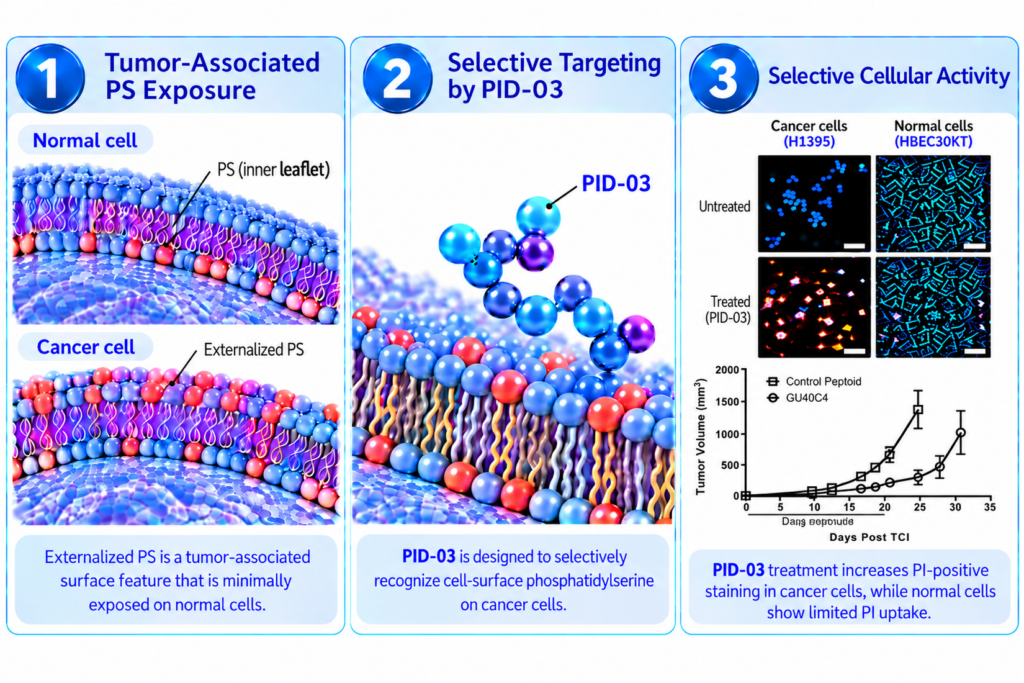
A 3D synthetic peptide therapeutic targeting externalized phosphatidylserine (PS) lipid, extending beyond conventional protein targets with broad potential across cancer types.
PID-03 is a 3D synthetic peptide therapeutic designed to selectively recognize phosphatidylserine (PS) exposed on the outer surface of cancer cells. By targeting a tumor-associated lipid rather than a conventional protein biomarker, PID-03 demonstrates the ability of our platform to access chemically distinct classes of therapeutic targets. Because externalized PS is observed across diverse tumor types, this strategy may bypass protein biomarker heterogeneity and provide a broadly applicable approach for targeting heterogeneous cancers.
Discovery & Research Programs
Our ongoing discovery programs focus on novel cancer-associated targets, resistant disease states, and underserved tumor phenotypes where current therapeutic options remain limited. By integrating flexible molecular design, selective phenotypic screening, and target identification, we aim to generate differentiated therapeutic leads and expand our pipeline into areas of highly unmet needs in the future.
Future Innovation with AI
We aim to integrate AI-driven molecular design and data-driven analysis into our 3D synthetic peptide and peptidomimetic platform to advance next-generation therapeutic discovery. By combining computational insights with experimental validation, we seek to accelerate lead optimization, improve candidate selection, and explore new opportunities for developing innovative cancer therapeutics.